
7 Signs You Need Air Freight, Not Ocean
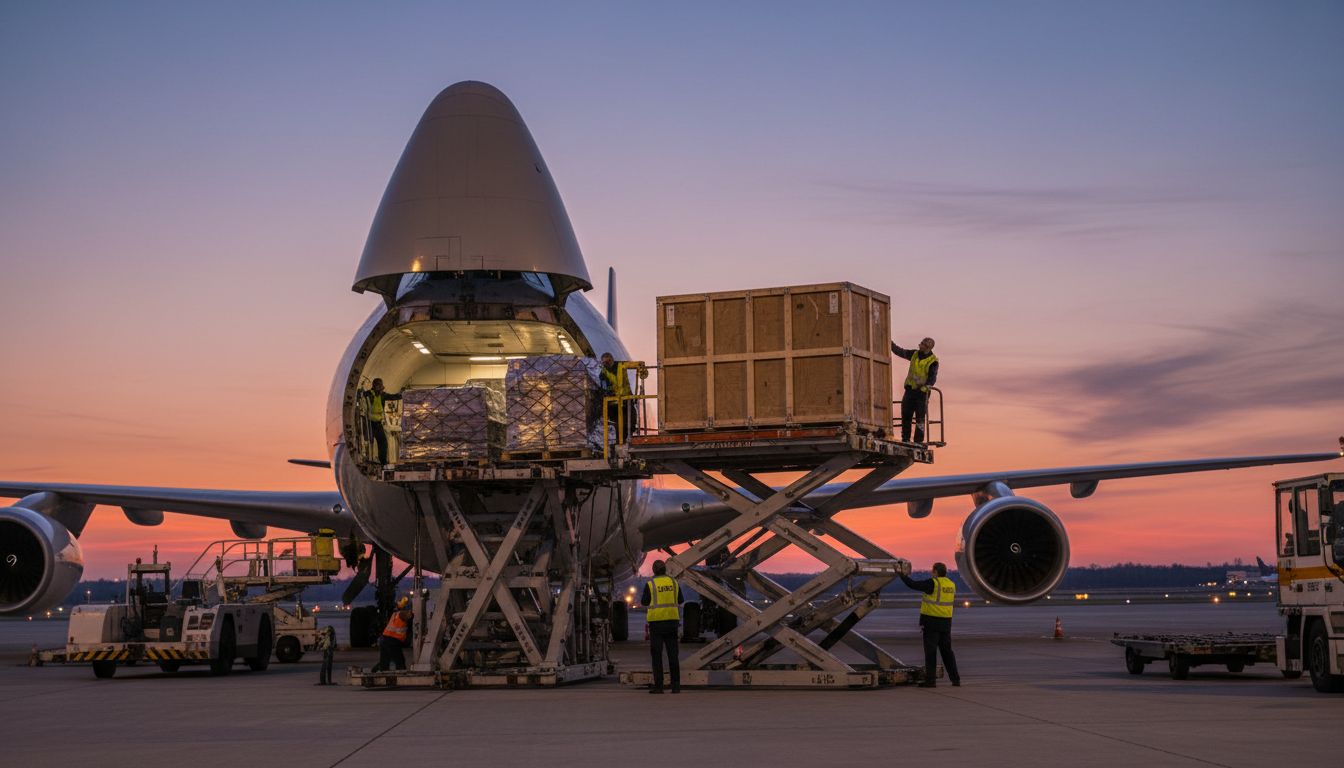
If you are weighing air freight against ocean freight for an international move, there are seven specific signs that point to air. Almost all of them come down to the same three questions: how fast you need your things, how much you are actually shipping, and what the delay would cost you in rent, replacement purchases, or risk. Work through the seven below and the answer usually becomes obvious.
- Air freight is priced by weight, ocean by volume - so small, dense, urgent shipments favor air.
- A hard arrival date set by a visa, job start, or school term is the strongest single sign.
- Shipping only a few boxes rarely fills enough space to make an ocean container economical.
- Many families use both: air for the first-month essentials, ocean for the rest of the household.
- If you are unsure, get both options quoted side by side before you start packing.
Do you have a hard arrival date you cannot move?
Yes, a hard arrival date you cannot move is a strong reason to consider air freight.
A visa start date, a first day at a new job, or a school enrollment deadline turns "when it gets there" into a real problem. Ocean freight moves on vessel schedules, with port handling and customs clearance stacked on either end, so the window from pickup to destination delivery is measured in weeks. Air freight compresses the transit portion of that timeline dramatically. If you already know the date you must be functioning in your new home, start from that date and work backward - that calculation alone decides most of these cases.
Are you shipping a few boxes, not a household?
Yes, shipping only a few boxes rather than a household is a reason to consider air freight.
Ocean freight earns its lower rate when you are filling space. If your whole shipment is six boxes, two suitcases, and a bicycle, you are paying for volume you are not using, and the fixed port-side costs on both ends get spread across very little cargo. Air freight is charged against weight, which is exactly why small, light, compact shipments often price out closer than people expect. Students, single professionals, and anyone relocating into a furnished apartment usually sit in this category.
Do you need a "first month" shipment ahead of the main one?
Yes, a first-month shipment ahead of the main one is a common reason to use air freight.
This is the most common real-world answer, and it is not air or ocean - it is both. We split the household: clothing, kitchen basics, work equipment, children's items, and documents go by air freight so you can live normally from day one, while furniture and everything non-urgent follows by ocean freight. Done properly, the two shipments are packed, inventoried, and documented as one coordinated move, so nothing goes missing between them.
4. Waiting is costing you money every week
Run the number people usually skip. Add up what a long transit actually costs you: temporary accommodation, a rental furniture package, replacement clothes and kitchen goods you buy because the originals are still at sea, and the work days lost without your equipment. When those weekly costs are real, the gap between air and ocean narrows fast and sometimes closes entirely. Ask for both prices against your actual inventory rather than guessing - that is the only way to compare honestly. If you want a starting point, see what ocean freight costs in the San Francisco Bay Area before you request an air quote.
5. The items are high-value, fragile, or genuinely irreplaceable
Less time in transit means fewer handling points, fewer temperature and humidity swings, and a shorter window for anything to go wrong. For instruments, artwork, lab or studio equipment, and family pieces that cannot be re-bought, that shorter exposure is often worth more than the freight savings. Air freight pairs naturally with custom crating, where the item is measured and built around rather than squeezed into a standard carton. If you cannot describe a replacement plan for an item, it belongs in this group.
6. Your shipment is small enough to be awkward for ocean, but too big to fly as baggage
There is a real gap between "extra checked bags" and "a shipping container," and a lot of moves land in it. Signs you are in that gap include:
- Your shipment is over airline baggage allowances but well under a container load.
- You have one or two oversized items - a bike, a stroller, a monitor, a mattress - driving the whole decision.
- Airline excess-baggage fees for the same weight look worse than freight once you price them out.
- You need the items tracked, inventoried, and insured, not handed over at a check-in desk.
Air freight is built for exactly this middle band, with proper documentation and a delivery leg at the other end.
7. Your paperwork needs to be right the first time
Air shipments clear customs on a tighter clock, which is an advantage only if the customs documentation is clean. Inventory lists, valuation, and destination-country requirements all have to match before the shipment moves, because a document problem erases every hour of speed you paid for. This is the part of an international move that most often goes wrong when it is handled informally, and the main reason to run air freight through a mover who prepares the paperwork as part of the job.
Air freight vs ocean freight: the short comparison
| Factor | Air freight | Ocean freight |
|---|---|---|
| Priced mainly by | Weight | Volume |
| Best for | Small, urgent, high-value loads | Full households, flexible dates |
| Transit time | Shortest available | Weeks, vessel-schedule driven |
| Handling points | Fewer | More, over a longer window |
The bottom line
You need air freight when your timeline is fixed, your shipment is small or valuable, or waiting would cost you more than shipping. You need ocean freight when you are moving a full household and your dates have room in them - if that sounds closer to your move, How Do I Know If I Need Ocean Freight? walks through the signs in more detail. Most families we work with end up somewhere in between, and the right answer is a split shipment built around what they genuinely cannot live without.
Ironmen Moving and Storage handles moving for households, including local moving, storage, and international moving across San Jose, Sunnyvale, Mountain View, Fremont, Palo Alto, Redwood City, Hayward, San Mateo, Oakland, and Walnut Creek - including air freight, ocean freight, packing, crating, customs documentation, and destination delivery. Send us your inventory and your arrival date, and we will price air and ocean side by side so you can decide with real numbers in front of you. Request your international moving quote today.
Frequently Asked Questions
Air freight is usually the right call if you have a fixed arrival date you cannot move, you are shipping a small or light load rather than a full household, your items are high-value or irreplaceable, or the cost of waiting weeks for a sea shipment exceeds the freight difference. Ocean freight makes more sense for full households with flexible dates.
Yes, and it is the most common solution. Clothing, kitchen basics, work equipment, and children's items go by air so you can function immediately in your new home, while furniture and non-urgent belongings follow by ocean. We plan, pack, inventory, and document both shipments as one coordinated move.
Air freight is charged primarily against weight, while ocean freight is charged against the volume your shipment occupies. That is why a few dense boxes can price competitively by air, while a large, bulky household almost always ships more economically by sea.
Aerosols, paints and solvents, propane and other pressurized canisters, certain lithium batteries, and some household cleaning products are restricted or prohibited as air cargo. Have your inventory reviewed before packing, because a single undeclared restricted item can delay an entire shipment.
Yes. Customs documentation is part of our international moving service, alongside packing, crating, air and ocean freight, and destination delivery. Accurate inventory and valuation documents are what keep an air shipment moving on the schedule you paid for.
Have a question about this? Call 1-800-326-2099 or request a quote.