
Booking Loading in the San Francisco Bay Area: What to Know
By Ironmen Moving and Storage, Ironmen Moving and Storage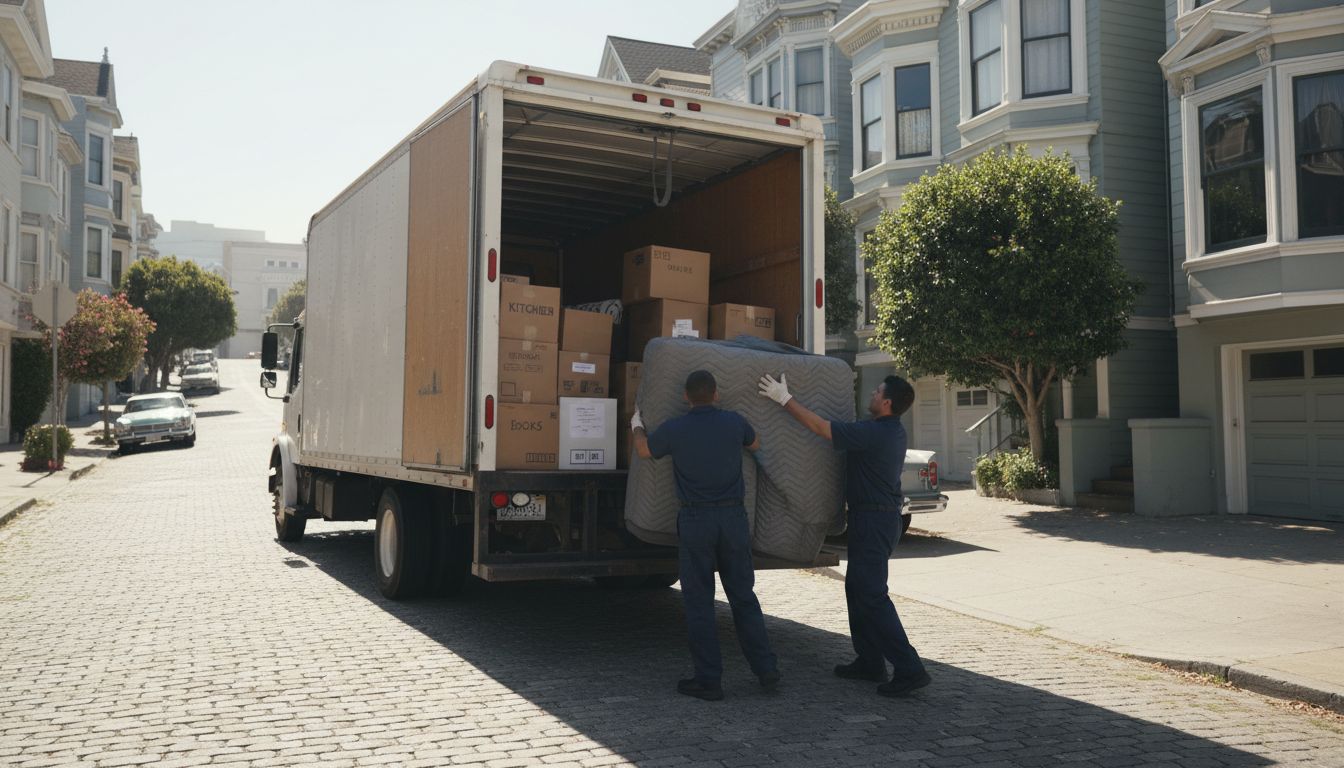
Before booking loading in the San Francisco Bay Area, confirm what is being loaded and where it is going, whether your belongings are already packed, how far the crew must carry them, and whether your building requires an elevator reservation or a street parking permit. Ironmen Moving and Storage provides loading across San Francisco, the Peninsula, South Bay, East Bay, and North Bay.
- Loading is labor, not packing. Boxes should be sealed and ready before the crew arrives, or book packing as a separate service.
- Access drives the time and the price. Stairs, long carries, elevator waits, and hill parking matter more than square footage.
- Tell us the destination. Loading for storage, a long-distance trailer, or ocean freight each requires different stacking and protection.
- Reserve the elevator and the curb early. Many Bay Area buildings need advance booking and a certificate of insurance.
- Verify any mover you hire using the federal FMCSA consumer tools before you commit.
What a loading service actually includes
Loading means a trained crew moves your belongings out of your home and into a truck, trailer, container, or storage unit, then stacks and secures them so nothing shifts in transit. It is the physical, skilled part of a move, and it is available on its own if you have already arranged your own vehicle or container.
A professional loading job typically covers:
- Carrying sealed boxes and furniture from inside the home to the vehicle
- Blanket-wrapping and padding furniture, appliances, and fragile pieces
- Disassembling and protecting items that will not clear a doorway or stairwell intact
- Building a tight, weight-balanced load so the stack does not collapse on the road
- Strapping and securing tiers inside the truck or container
Ironmen also handles packing, crating for high-value or awkward items, secure storage, and full local moving if you would rather one team carry the job end to end.
Your boxes should be packed before the crew arrives
This is the single most common surprise. A loading crew is booked for muscle and technique, not for wrapping your kitchen. If cabinets are still full and boxes are still open, the crew has to stop and pack, which lengthens the job.
If you know you will not finish, book packing alongside loading rather than hoping it works out on the day. Materials, labeling, and proper cushioning are what keep glassware and electronics intact in a shifting truck.
What "ready to load" looks like
- Every box taped shut and labeled with its room and contents
- Drawers emptied of loose or breakable items
- Lamps, TVs, and mirrors wrapped or set aside for the crew to crate
- Walkways, hallways, and stairwells cleared end to end
- Anything not going on the truck moved to one clearly marked room
Bay Area buildings decide how long loading takes
Two identical two-bedroom homes can take very different amounts of time here, and it is almost never about the amount of stuff. It is about access. Be specific about your building when you request an estimate.
- Stairs and walk-ups. San Francisco and older Oakland and Berkeley buildings are full of three- and four-story walk-ups with tight landings. Every flight adds carry time.
- Elevator buildings. Many Peninsula, South Bay, and downtown high-rises require a reserved service elevator, a booked move-in window, and a certificate of insurance filed with management in advance.
- Long carries. If the truck cannot get within a reasonable distance of your door, the crew is shuttling items further on foot.
- Parking and hills. Narrow streets, permit zones, and steep grades in San Francisco, Marin, and parts of the East Bay all affect where a truck can legally and safely sit.
- Gates and HOA rules. Fremont, Sunnyvale, Mountain View, Palo Alto, Redwood City, San Mateo, Hayward, Walnut Creek, and Concord communities often restrict move hours or require gate codes.
Ask your building manager about elevator reservations and insurance paperwork as soon as your date is set. That one call prevents more delays than anything else on this list.
Where the load is going changes how it is built
Tell the crew the destination before they start stacking. A load headed three miles across San Jose is built differently from one that will sit on a highway for days or cross an ocean.
- Local moving within the Bay Area, or across California to Los Angeles, San Diego, Sacramento, Fresno, or Tahoe, is a straightforward truck load.
- Long-distance moving to any of the 50 states needs tighter tiers, more padding, and heavier strapping for sustained road vibration.
- Secure storage loads should be organized so the items you will want first stay accessible at the front.
- International moving by ocean freight or air freight to 150+ countries adds crating, customs documentation, and destination delivery, and the container has to be built to survive handling at both ports.
Before you hand your belongings to any crew, confirm the company is a legitimate, registered mover and understand your rights as a customer using the federal consumer-protection guidance at FMCSA "Protect Your Move".
What should I prepare before the loading crew arrives?
You should seal and label your boxes, clear walkways, and set aside anything that is not going on the truck before the crew arrives.
What building details should I share when booking loading?
You should share the number of stairs, elevator requirements, truck parking distance, hill access, and any gate or move-hour restrictions.
What should I tell the crew about the destination?
You should tell the crew whether the load is going to local delivery, long-distance transport, secure storage, or international shipping.
Questions worth asking before you book
- Is this loading only, or do I also need packing, crating, or storage?
- How many flights of stairs, and how far is the truck from my door?
- Does my building require an elevator reservation or a certificate of insurance?
- Where is the truck parking, and do I need a temporary permit?
- What is going into storage versus onto the truck?
- Are there oversized, fragile, or high-value pieces that should be crated?
How to get an accurate estimate
Accuracy comes from detail. Share your room count, an honest inventory of large furniture and appliances, your access situation, your dates, and your destination. An estimate built on a vague description is the one most likely to change on moving day.
Flag anything unusual early: a piano, a safe, a treadmill, oversized art, a marble tabletop, or anything that will not fit through a standard door. Those pieces need the right equipment and often need crating, and they are much easier to plan for a week out than an hour in.
Book loading with Ironmen Moving and Storage
If you have a truck, a container, or a storage unit waiting and need a strong, careful crew to load it properly, we are ready across San Francisco, the Peninsula, South Bay, East Bay, and North Bay. Tell us what you are moving, where it is going, and what your building is like, and we will tell you exactly what the job takes. Request a loading estimate to get started.
Frequently Asked Questions
A crew carries your sealed boxes and furniture from your home to a truck, container, or storage unit, pads and wraps furniture, and stacks and straps the load so it does not shift. Packing your boxes is a separate service.
Yes. Boxes should be taped shut and labeled, and walkways cleared, before the crew arrives. If you will not finish in time, book packing alongside loading rather than leaving it to moving day.
Access, more than volume. Stairs and walk-ups, elevator reservations, long carries from the truck to the door, hill grades, and narrow or permit-only street parking are the main factors.
Yes. Ironmen loads for secure storage, long-distance moves across all 50 states, and international shipments by ocean or air freight to 150+ countries, including crating, customs documentation, and destination delivery.
San Francisco, the Peninsula, South Bay, East Bay, and North Bay, including San Jose, Oakland, Berkeley, Fremont, Sunnyvale, Mountain View, Palo Alto, Redwood City, San Mateo, Hayward, Walnut Creek, Concord, and Marin.
Have a question about this? Call 1-800-326-2099 or request a quote.