
Local Moving Cost in the San Francisco Bay Area (2026)
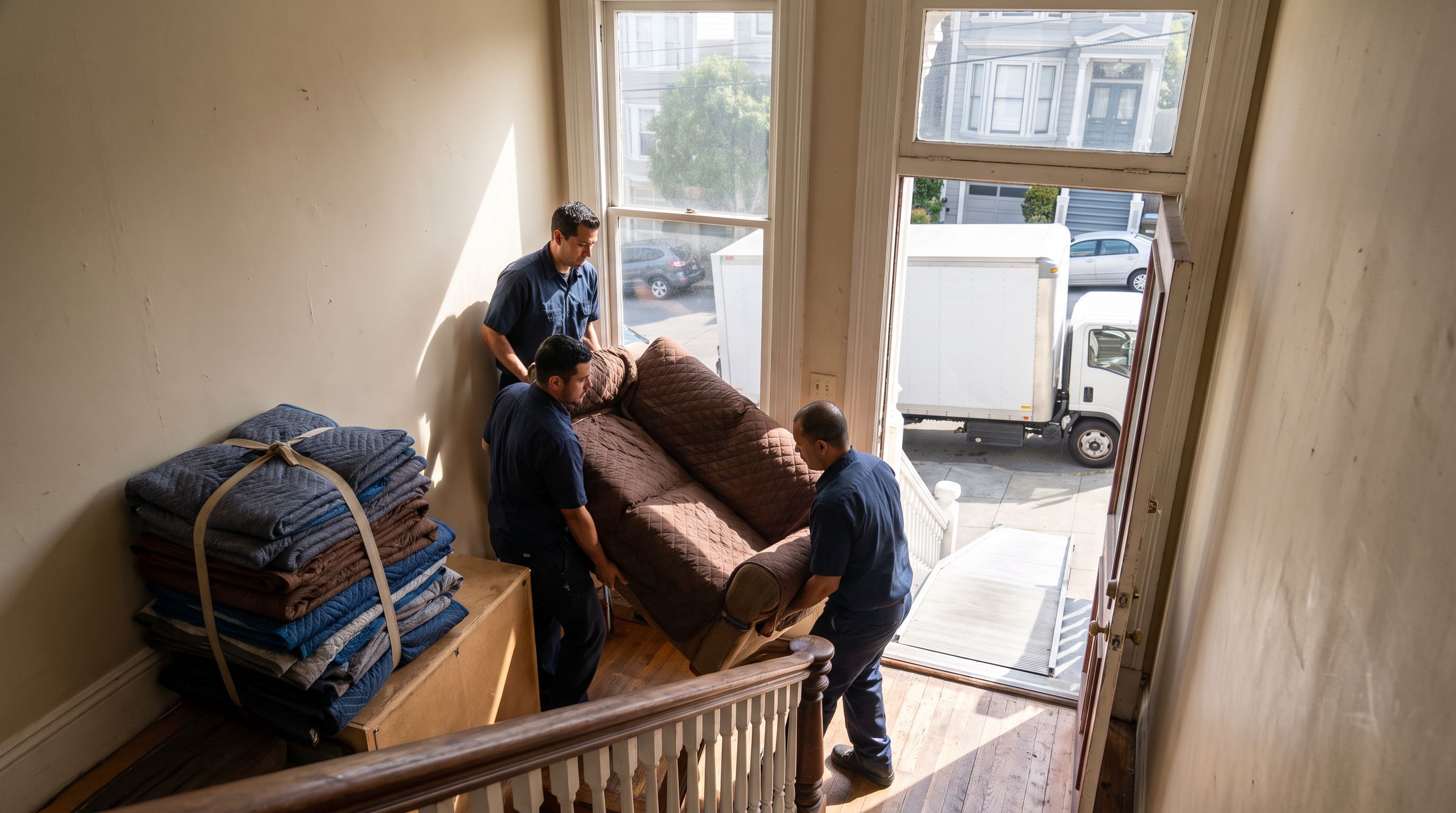
A local move in the San Francisco Bay Area typically costs $880 to $2,570, averaging about $1,250, with crews billing roughly $25 to $50 per mover per hour, per Angi. Studios land at the low end; three-bedroom homes with stairs reach the top. A free written walkthrough estimate confirms your number.
- Published national data puts a local household move at $880 to $2,570, averaging near $1,250, at $25 to $50 per mover per hour.
- Local moves are priced by crew size multiplied by hours, so what slows the crew down is what raises the bill.
- Bay Area homes push toward the upper half of that range: walk-ups, narrow streets, long carries and elevator buildings all add hours.
- Packing labor and materials, bulky items and storage are separate line items, not part of the base hourly rate.
- The only number that matters is the one on your written, no-obligation estimate after an inventory walkthrough.
What a local Bay Area move costs in 2026
Published cost data puts a local household move at roughly $880 to $2,570, with a national average near $1,250 and hourly crew rates of $25 to $50 per mover (Angi, 2026). HomeAdvisor reports a comparable band for hiring a moving service (HomeAdvisor, 2026).
Those are typical published estimates, not a quoted price. In the Bay Area, higher labor costs and older, stair-heavy housing stock tend to place real moves in the upper half of that published range rather than the bottom. Ironmen Moving and Storage confirms your actual figure with a free, no-obligation estimate based on your inventory and your building.
How the hourly math actually works
A local move is almost never priced by weight. It is priced by crew size multiplied by hours on site, plus a truck or travel charge. That single fact explains every quote you will receive.
- Studio or one-bedroom apartment: 2 movers, 3 to 5 typical hours, about $150 to $500 in labor
- Two-bedroom home: 3 movers, 5 to 7 typical hours, about $375 to $1,050 in labor
- Three-bedroom home: 4 movers, 7 to 10 typical hours, about $700 to $2,000 in labor
Arithmetic applied to the $25 to $50 per mover hourly range published by Angi, 2026. Truck and travel charges, packing labor, materials and any minimum hours are additional.
Notice that a bigger crew is often cheaper overall, because four movers clear a three-bedroom house in far fewer billable hours than two movers can. Our local moving crews are sized to the inventory for exactly that reason.
Why San Francisco addresses sit higher in the range
The Bay Area adds friction that a flat suburban driveway does not. For movers in San Francisco in particular, the building and the street often matter more than the furniture.
- Walk-ups and Victorian stairwells: every flight adds carry time, and narrow turns mean sofas get hoisted rather than rolled.
- Long carries: when the truck cannot park at the door, each item travels further on foot, and the clock runs.
- Street access and permits: steep one-way streets, metered parking and tight corners can require a smaller shuttle vehicle to reach the entrance.
- Elevator buildings: many condo and apartment buildings require a reserved elevator window and a certificate of insurance before move day.
- Peak timing: month-end, first-of-month and summer weekends are the busiest slots across the region.
Line items that are not in the hourly rate
Most cost surprises are not the hourly rate. They are the extras nobody discussed during a phone quote. Ask about each of these up front:
- Packing labor and materials: boxes, paper, tape and wardrobe cartons are billed as a paid service, and full packing adds hours.
- Bulky and specialty items: pianos, safes, oversized mirrors, treadmills and large glass tops need extra handling.
- Disassembly and reassembly: bed frames, sectionals and wall units take time at both ends.
- Shuttle service: used when a full-size truck cannot physically reach the door.
- Storage between dates: if your closing dates do not line up, secure storage is priced separately from the move itself.
- Valuation coverage: basic liability versus full-value protection changes your total and your exposure.
How to compare quotes without getting burned
Household moves that stay inside California are regulated by the California Public Utilities Commission (CPUC), not by federal interstate rules, so ask any mover for their CPUC license number before you book.
Then insist on a written estimate built from an actual inventory. A quote given in ninety seconds over the phone, with no list of what you own and no question about stairs or elevators, is a guess that tends to grow on move day.
- Confirm whether the quote is hourly or flat rate, and what the minimum billable hours are.
- Ask how travel time between the two addresses is calculated.
- Get the crew size in writing, not just the price.
- Check what valuation coverage is included by default.
Before you hand over a deposit, it is worth knowing how to verify a moving company and recognize the estimate tactics that inflate a final bill. The federal consumer-protection resource for vetting movers is FMCSA "Protect Your Move".
Get your Bay Area moving cost in writing
You should not have to guess at your own number. Walk us through your inventory, your stairs and your building rules, and we will put a free, no-obligation moving estimate in writing, with the crew size and the hourly terms stated plainly.
Call (800) 326-2099 or email info@ironmenmovingandstorage.com. We are reachable Monday through Saturday, 8:00am to 6:00pm, and Sunday, 9:00am to 5:00pm, for local moves across San Francisco, San Jose, Oakland, Berkeley, Palo Alto and the wider Bay Area.
Frequently Asked Questions
How much does a local move cost in the San Francisco Bay Area?
Published data puts a local household move at about $880 to $2,570, averaging near $1,250, at $25 to $50 per mover per hour (Angi, 2026). Bay Area moves tend to land in the upper half of that range.
How many hours does a local Bay Area move take?
A studio or one-bedroom typically takes 2 movers 3 to 5 hours, a two-bedroom takes 3 movers 5 to 7 hours, and a three-bedroom takes 4 movers 7 to 10 hours. Stairs and long carries add time.
Why do San Francisco moves cost more than suburban moves?
Price follows hours, and San Francisco adds hours through walk-up stairwells, long carries from metered or distant parking, and buildings that require reserved elevator windows.
Packing labor and materials, bulky item handling, disassembly and reassembly, shuttle service, storage and upgraded valuation coverage are billed separately from the hourly crew rate.
Request a written estimate based on a full inventory walkthrough, including crew size and hourly terms. Ironmen Moving and Storage provides a free, no-obligation moving estimate.
Have a question about this? Call 1-800-326-2099 or request a quote.