
In-House Vault Storage: San Francisco Bay Area Guide
By Ironmen Moving and Storage, Ironmen Moving and Storage
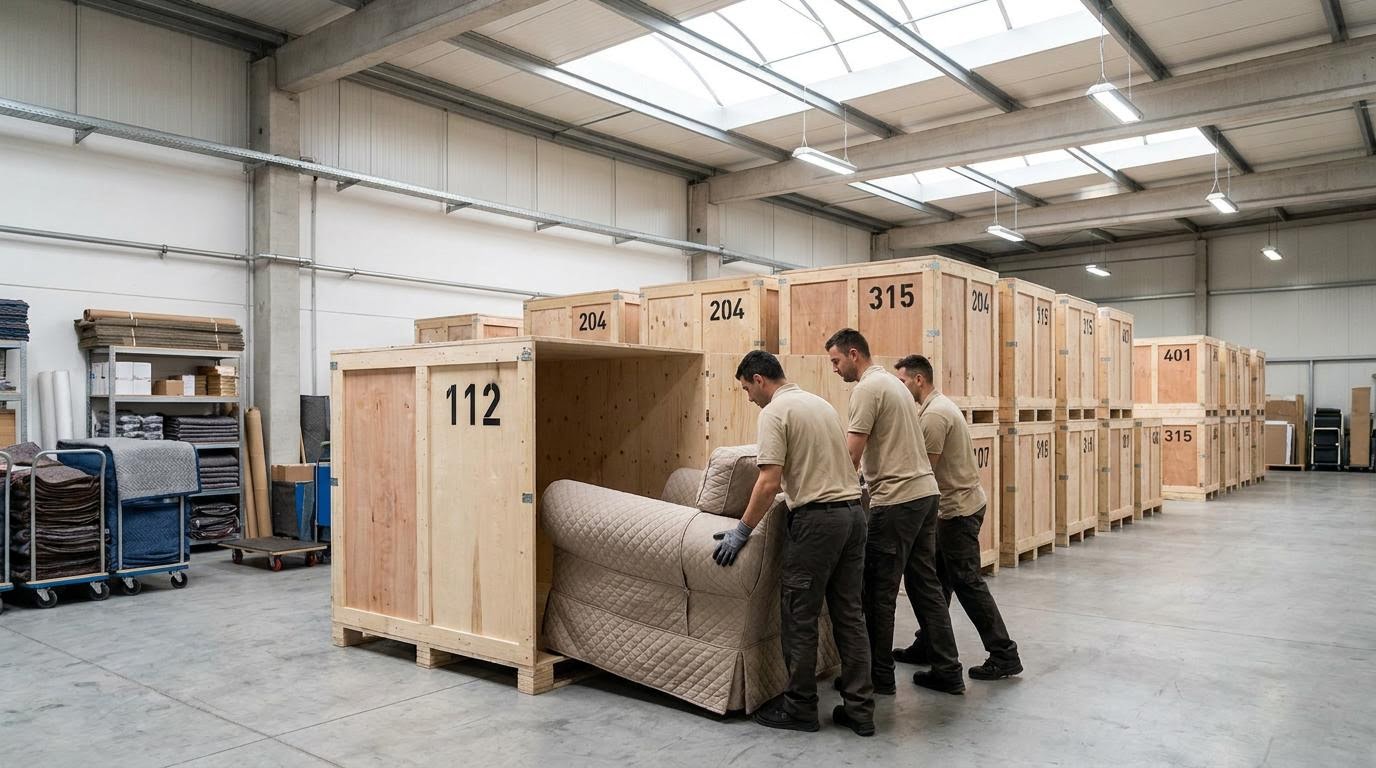
In-house vault storage means your household belongings are padded, loaded into individual wooden containers called vaults, sealed, inventoried and kept inside a moving company's own warehouse rather than in a unit you drive up to. Before you book it anywhere in the San Francisco Bay Area, four things decide whether it will work for you: how your goods are inventoried before the vault is closed, what valuation coverage is offered, how storage is billed and for how long, and how much notice redelivery takes. Get those four in writing and the rest of the decision is easy.
- In-house vault storage keeps your belongings in sealed, inventoried wooden containers inside a mover's warehouse - there is no drive-up unit.
- Get a written inventory and condition report before the vaults are sealed; it is your only record of what went in.
- Confirm valuation coverage, how storage is billed, any minimum term and the notice needed for redelivery before you sign.
- Retrieval is by appointment, so keep anything you need weekly out of storage. Ironmen is open Mon-Sat 8:00am-6:00pm and Sun 9:00am-5:00pm.
- It is most useful for gaps between closings, remodels and overseas shipping windows across the Bay Area.
What in-house vault storage actually is
With in-house vault storage, a moving crew pads and wraps each piece, loads it into a numbered wooden vault roughly the size of a small closet, seals it and stores it inside the company's warehouse. Nothing sits loose on an open floor, and nobody rolls up a door to dig through a pile. The trade-off is simple: your goods are handled once by trained movers instead of three or four times, but you give up casual access.
That is the mirror image of self-storage, where you rent empty square footage and do the loading, stacking and unloading yourself - usually twice.
Vaults or a self-storage unit?
Both are legitimate choices. The real question is what the next 60 to 90 days look like for you.
- Choose in-house vaults when you are between closings, waiting on a remodel, or sending a shipment overseas and your household needs a safe place to sit between pickup and delivery.
- Choose self-storage when you plan to visit often - seasonal gear, bikes, the box of papers you dip into every month.
- Handling counts. Vaults are loaded once at origin and opened once at destination; a rented unit usually adds two more load-and-unload cycles, which is where dings and scuffs come from.
- Space is charged differently. A vault is billed by the container you fill, while a unit is billed for its full footprint whether you use all of it or not.
Seven things to confirm before you book
Ask these during the estimate conversation, not on loading day. A professional operator should answer every one of them without hesitating.
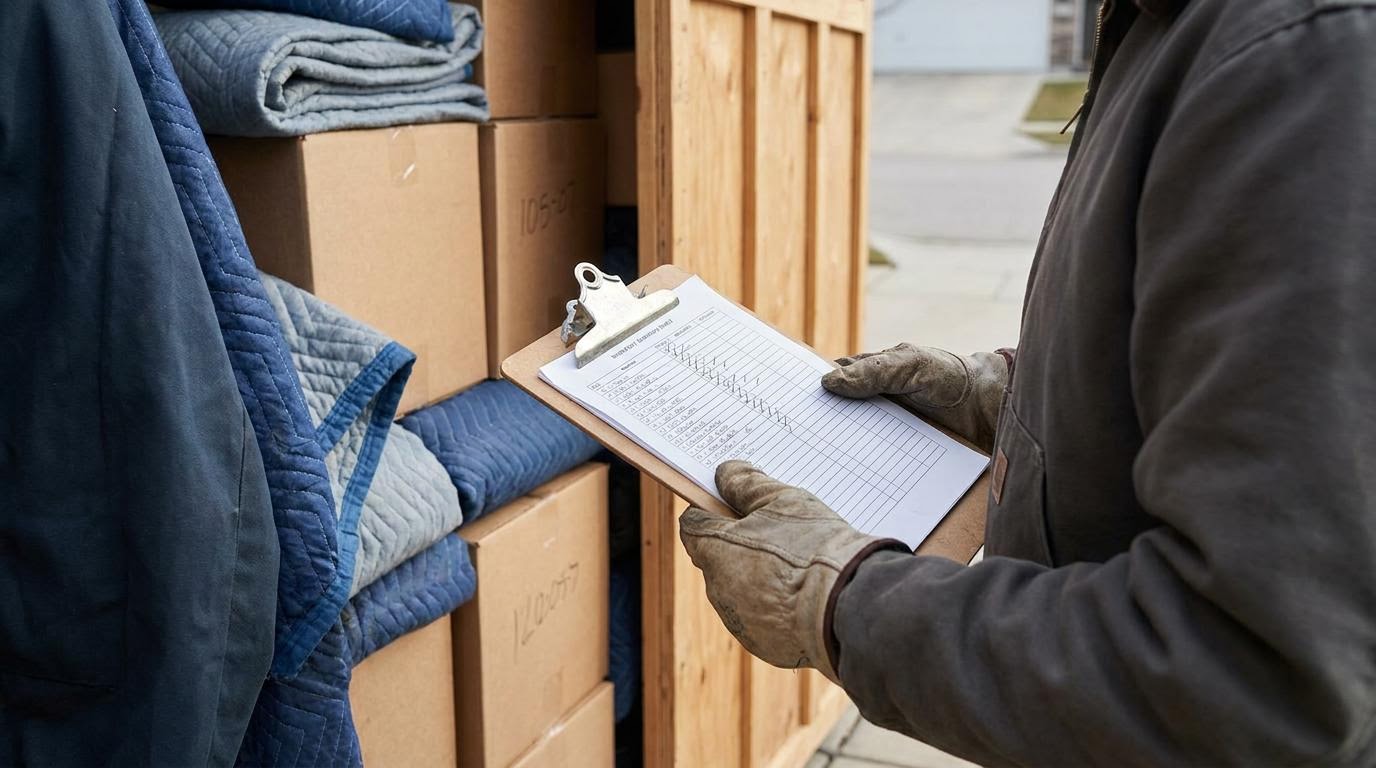
- A written inventory and condition report. Every carton and item should be numbered and its condition noted before the vault is closed. This is the document you will compare against at delivery.
- Valuation coverage. Released value versus full value protection, what is included while goods are in storage, and whether high-value pieces must be listed separately.
- How storage is billed. Per vault per month, by weight, or as a flat monthly figure - and when the clock starts.
- Minimum term and notice to release. Some providers bill a full month regardless of the date you pull out; ask before you plan around a closing.
- Handling in and out. Whether warehouse handling or drayage charges apply on the way in, on the way out, or both.
- Redelivery lead time. How many business days of notice are needed to schedule delivery out of storage, especially at month end.
- What is not allowed in a vault. Flammables, propane, paint, aerosols, batteries, open food and houseplants are standard exclusions anywhere you go.
Access: plan around appointments, not evenings
This is where expectations break most often. Vaults live in a working warehouse, so most providers require a scheduled appointment and a crew to pull and reopen your container - you cannot drop by at night and grab a lamp. Build that into your plan: label anything you may need and keep it with you instead. Our office takes calls and schedules Monday through Saturday, 8:00am to 6:00pm, and Sunday 9:00am to 5:00pm.
Why Bay Area households book vault storage
The reason is almost always timing. Closing dates, lease ends and contractor schedules rarely line up neatly, and a household has to go somewhere in between. In San Francisco the building adds a second layer, because elevator reservations and tight loading windows can force the truck to be emptied on a date that has nothing to do with when the new place is ready - something our movers in San Francisco deal with week in and week out.
It plays out the same way across the rest of our service area - San Jose, Oakland, Fremont, Berkeley, Hayward, Sunnyvale, Mountain View, Palo Alto, Redwood City, San Mateo, Walnut Creek and Concord. A remodel in Palo Alto, a rent-controlled handover in Oakland, a relocation out of Mountain View with a start date abroad: the common thread is a gap, and crated storage is a cleaner answer than a damp garage or a friend's spare room.
When storage is one part of a bigger move
Storage is rarely the whole job. On a long-distance or overseas relocation there is almost always a gap between pickup and the day the new home can receive goods, which is exactly what vault storage is built for. Our international movers in San Jose and our moving and storage in San Jose team price the storage portion alongside the move itself, so it is planned from the start rather than appearing later as a surprise.
Book it with the estimate, not after
If you are weighing in-house vault storage anywhere from San Francisco to San Jose, get the storage questions answered while you are still comparing movers. Call Ironmen Moving and Storage at (800) 326-2099 or email info@ironmenmovingandstorage.com for a free, no-obligation moving estimate that covers the move and the storage together. Strong crews, clear paperwork, and a plan you can hold us to.
Frequently Asked Questions
In-house vault storage is storage inside a moving company's own warehouse. Your belongings are padded, loaded into numbered wooden containers called vaults, inventoried and sealed, then kept on the warehouse floor until redelivery. There is no drive-up unit and no self-service loading.
With self-storage you rent empty space and move everything in and out yourself, which adds two extra handling cycles. With in-house vaults, trained movers load once at origin and open once at destination, and you are billed for the containers you actually fill rather than a fixed footprint.
Only by appointment during business hours, because a crew has to locate, pull and reopen your vault. Ironmen Moving and Storage schedules Monday through Saturday, 8:00am to 6:00pm, and Sunday 9:00am to 5:00pm. If you need an item weekly, keep it out of storage.
Ask for the redelivery lead time in business days before you book, and give as much advance notice as you can, especially around month end when move dates cluster. Confirm it at the same time as your minimum storage term so the two line up with your closing or lease date.
Yes. A gap between pickup and the date your new home can receive goods is one of the most common reasons Bay Area households use vault storage. Have the storage portion quoted with the move so the timeline and cost are planned together from the start.
Have a question about this? Call 1-800-326-2099 or request a quote.