
Destination Delivery Cost in the San Francisco Bay Area
By Ironmen Moving and Storage, Ironmen Moving and Storage
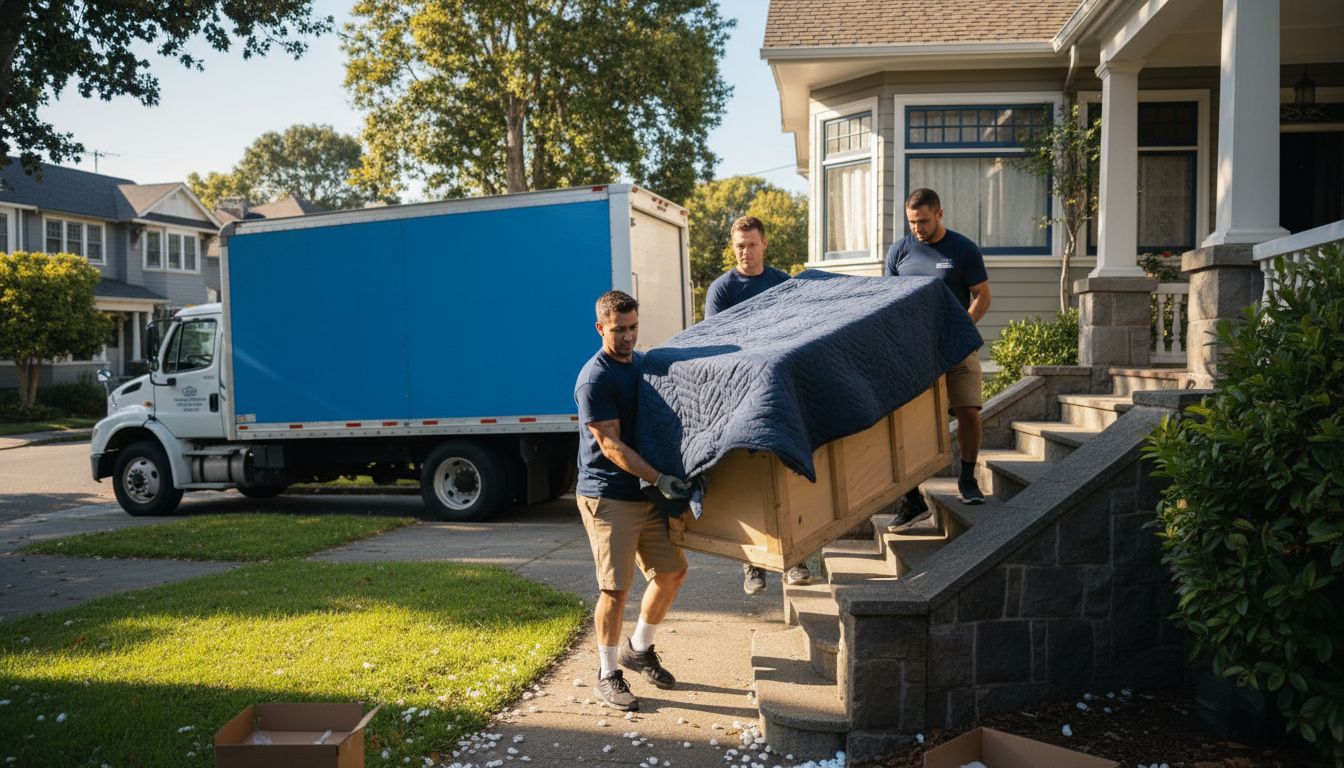
If you are moving a household into the San Francisco Bay Area from overseas, the ocean or air freight cost in the San Francisco Bay Area is only part of the story. Destination delivery is the final leg - everything that happens after your shipment lands - and it is the part most people underestimate. This article walks through a realistic scenario so you can see exactly what gets priced, why two households that shipped on the same vessel can pay very different amounts, and how to get a number you can plan around.
- Destination delivery is priced as a set of separate components, not one flat fee - so "how much" always depends on which components your move needs.
- The three biggest cost drivers are the volume of your shipment, the distance from the arrival port to your address, and how difficult that address is to access.
- Many San Francisco, Berkeley and Peninsula addresses need a shuttle transfer or a long carry, which is the single most common surprise line on a Bay Area delivery.
- Customs documentation, storage between arrival and delivery, and uncrating are each priced on their own and can be added or removed.
- The only honest number comes from a written quote built on your real inventory, your real address and your real timing.
What is destination delivery?
Destination delivery is the work completed after an international shipment arrives, including clearance support, transport, unloading and placement at your address.
Why do Bay Area destination delivery costs vary?
Bay Area destination delivery costs vary because shipment volume, travel distance, street access, stairs, parking and storage needs differ from one address to another.
How can I prepare for destination delivery?
You can prepare for destination delivery by providing an accurate inventory, complete address and access details, expected arrival window and any storage requirements.
The situation
Picture a typical case. A household is relocating from abroad to the Peninsula, with a full container of furniture, boxes and a few crated items moving by ocean freight. The origin quote was clear. Then the container is booked, the sailing date is set, and the question arrives: what happens once this thing reaches California, and what does that part cost?
This is the moment where "destination delivery" stops being a line item on a contract and becomes real work. Containers arriving into the Bay Area typically come through the Port of Oakland, and from that gate to a living room in Palo Alto, San Mateo or Walnut Creek there is a whole sequence of steps - each of which is a cost.
What destination delivery actually covers
The phrase sounds like one service. It is really a bundle, and understanding the pieces is how you understand the price:
- Customs documentation and clearance support - preparing and filing the paperwork your shipment needs before it can be released.
- Port and terminal handling - the fees charged at the arrival terminal to process and release your container.
- Inland transport - hauling the container or transferred cargo from the port to your address.
- Delivery crew and unloading - the labor hours that carry your belongings from the truck into the correct rooms.
- Shuttle transfer - moving your goods onto a smaller vehicle when a full-size container truck cannot reach or legally park at your street.
- Secure storage - short or longer term storage if your home is not ready when the shipment clears.
- Uncrating and unpacking - opening the crates we built at origin and unpacking boxes, if you want that included.
Two households can ship an identical container and pay very different destination totals simply because one needed a shuttle and three weeks of storage and the other did not.
What drives the cost in the Bay Area
Bay Area geography is genuinely different from most of the country, and it shows up on the bill. Steep streets in San Francisco, permit-restricted parking, narrow residential blocks in Berkeley and older buildings without elevators all convert directly into crew hours.
| Cost component | What moves the price | Impact on your total |
|---|---|---|
| Shipment volume | Cubic volume and weight of the household goods being delivered | High |
| Delivery crew and unloading | Crew size and hours, stair carries, elevator waits, long carries from the truck | High |
| Shuttle transfer | Whether a container-size vehicle can legally reach and park at your address | Moderate, and very common in San Francisco |
| Inland transport from the port | Distance from the arrival terminal to your address across the Bay Area | Moderate |
| Port and terminal handling | Terminal fees, and any time the container sits before it is picked up | Moderate |
| Customs documentation | Shipment type, paperwork complexity, whether the shipment is selected for examination | Variable |
| Secure storage | How long your goods must be held before the home is ready | Variable, priced by duration |
| Uncrating and unpacking | Number of crated items and how much unpacking you want the crew to do | Optional add-on |
Notice that only two of these are really about your belongings. The rest are about your address, your timing and your paperwork - which is why an accurate quote needs all three, not just a box count.
What the process looks like
In our scenario, the container arrives at the port and the clock starts. The first job is customs documentation, because nothing else can begin until the shipment is released. Clean, complete paperwork prepared before arrival is the cheapest thing you can do for your own move; incomplete paperwork is what causes a container to sit and accrue terminal time.
Once released, we schedule the delivery with you. That scheduling conversation is also a survey conversation. We want to know the street width, the parking situation, whether there is an elevator, how many stairs, and whether a full-size vehicle can get in. If it cannot, we plan a shuttle transfer in advance rather than discovering it with a truck idling on your block.
On delivery day, the crew unloads, carries and places your items room by room. If we crated artwork, mirrors or fragile furniture at origin, uncrating happens here. If your home is not ready, the shipment goes into secure storage instead and is delivered when you are.
What to expect afterward
The realistic outcome is that the destination portion of an international move costs more than most people budget for, and less than they fear once they see it itemized. Every line on it corresponds to a physical task somebody performed. When a quote is broken out this way, you can also make choices: keep the unpacking, drop it, add storage, remove it.
Households that get an unwelcome number at the end almost always share one of three causes - the inventory grew after the origin survey, the address was harder to access than described, or the shipment sat at the terminal waiting on paperwork. All three are avoidable, and all three are avoidable before the container sails.
How to get a number you can act on
- Send an accurate inventory, including anything that will need crating.
- Give the real destination address, plus the details that matter: floor, elevator, stairs, street access and parking restrictions.
- Tell us your expected arrival window and whether you may need secure storage before delivery.
- Confirm which optional services you want - unpacking, uncrating, or delivery only.
- Ask for the destination charges itemized, so you can see each component rather than one lump sum.
Get your destination delivery quoted properly
Ironmen Moving and Storage handles international moving end to end - packing, crating, loading, ocean freight, air freight, customs documentation, secure storage and destination delivery throughout San Francisco, the Peninsula, the South Bay, the East Bay and the North Bay. If your shipment is heading to the Bay Area, contact us with your inventory and your destination address and we will put a clear, itemized destination delivery quote in front of you.
Frequently Asked Questions
Destination delivery covers everything after your shipment arrives: customs documentation and clearance support, port and terminal handling, inland transport from the arrival terminal to your address, the delivery crew that unloads and places your belongings, and optional services such as shuttle transfer, secure storage, uncrating and unpacking.
Because most of the cost is driven by your address and timing rather than your belongings. A home that needs a shuttle transfer, a long carry or several flights of stairs takes far more crew hours than a ground-floor home with easy truck access, and storage between arrival and delivery adds its own charge.
A shuttle transfer moves your goods from the large delivery vehicle onto a smaller truck that can reach your street. It is common on steep, narrow or permit-restricted blocks in San Francisco and in older Berkeley and Peninsula neighborhoods, which is why we ask about street access and parking before delivery day rather than on the day itself.
Yes. Send an accurate inventory so nothing is added later, describe your access honestly so the right equipment is planned from the start, have your customs documentation complete before arrival so the container is not sitting at the terminal, and choose only the optional services you actually want.
Send your inventory, your real destination address with floor, elevator, stair and parking details, your expected arrival window, and whether you may need secure storage. Ask for the destination charges itemized by component so you can see exactly what each part of the service costs.
Have a question about this? Call 1-800-326-2099 or request a quote.