
Booking Customs Documentation in the SF Bay Area
By Ironmen Moving and Storage, Ironmen Moving and Storage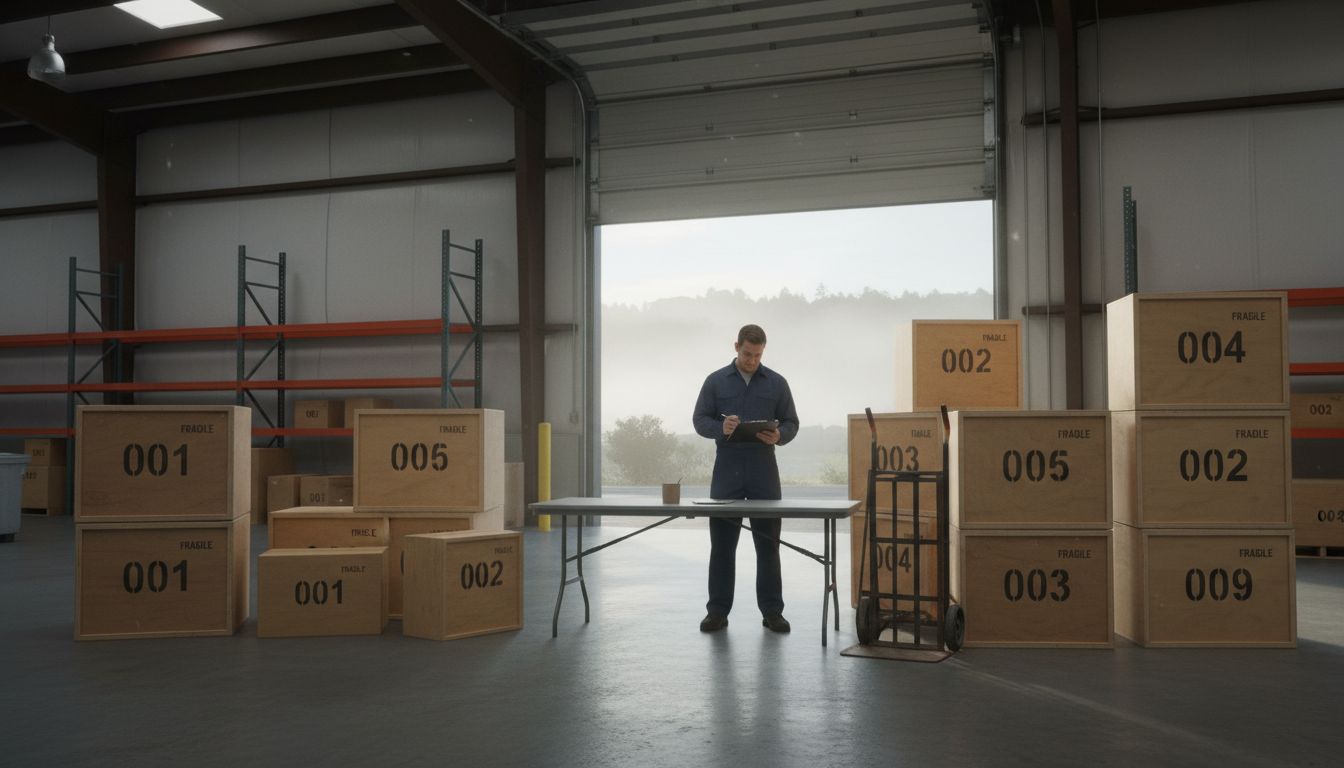
Before booking customs documentation in the San Francisco Bay Area, know that the paperwork is built from your shipment itself: a detailed inventory of every carton and crate, your identification and visa or residency documents, and destination-specific declaration forms. Ironmen Moving and Storage prepares this documentation as part of international moving services shipping by ocean freight or air freight to 150+ countries worldwide, with local moving and storage available to support the timeline.
- Customs documentation is built from your packing inventory - vague box labels are the single biggest cause of delays.
- Start the conversation early, before packing day, not after your goods are loaded.
- Requirements differ by destination country and by ocean freight vs air freight.
- Have your identification, visa or residency paperwork, and destination address ready.
- Ironmen handles packing, crating, documentation, freight, and destination delivery as one coordinated move.
What does customs documentation cover?
Customs documentation is the set of declarations and supporting records that let your household goods legally leave the United States and enter your destination country. It is not a single form - it is a package of documents that must agree with each other and with the physical shipment.
The core of it is almost always the same: a valued inventory of what is in the shipment, proof of who you are, and proof of why you are moving (a work visa, a residency permit, a returning-resident status). Everything else is destination-specific detail layered on top.
Why does the inventory matter for customs?
The inventory matters for customs because it clearly describes what is inside the shipment. Most customs friction traces back to one thing: the inventory does not describe the shipment clearly enough. A carton labeled "misc" or "garage stuff" gives an inspecting officer no way to clear it, and the usual outcome is an inspection, a hold, or a request for a revised declaration.
This is why packing and documentation should be handled together. When the same team packs your cartons, crates your fragile and high-value pieces, and writes the inventory, the paperwork describes what is genuinely inside each numbered box. Ironmen's packing, loading, and crating services feed directly into the documentation for exactly this reason.
Questions to Answer Before You Book
Come to the first conversation with these ready and the process moves considerably faster:
- Destination country and full delivery address - requirements vary widely between countries.
- Your immigration status at destination - work visa, residency permit, returning citizen, student.
- Your travel dates - when you personally arrive matters for many countries' relocation allowances.
- Ocean freight or air freight - transit time, cost, and paperwork timing all differ.
- Anything unusual in the shipment - artwork, wine, firearms, plants, vehicles, professional tools, medications.
- Whether anything is new or still boxed - brand-new goods are often treated differently from used household effects.
Ocean Freight vs Air Freight: How It Changes the Paperwork
The freight method you choose shapes the documentation timeline more than most people expect.
Ocean freight
Ocean freight is the standard choice for a full household shipping out of the Bay Area. Because transit is measured in weeks, there is more room to finalize documentation - but the sailing schedule is fixed, and paperwork that misses the cutoff means waiting for the next vessel rather than a small delay.
Air freight
Air freight moves in days, which means the documentation has to be complete and correct before the shipment goes. Many people split their move: essentials by air, the bulk of the household by ocean. That is a common and sensible pattern, but it means two shipments and two sets of documents, so decide on the split early.
When should you start customs documentation?
Start customs documentation before packing because some required details take time to confirm. The most common scheduling mistake is treating documentation as a step that happens after packing. In practice it should start well before, because some of the inputs - visa approvals, a confirmed destination address, decisions about what ships and what stays - are outside anyone's control on the moving side.
If your visa or residency status is still pending, say so at the first conversation. It is a normal situation, and there are usually ways to sequence the move around it, but only if it is known in advance rather than discovered at the port.
What Happens on the Other End
Documentation is not finished when your shipment leaves the Bay Area. It has to satisfy the receiving country's customs authority, and then your goods need to clear and reach your new home. Ironmen coordinates destination delivery as part of international moves, so the paperwork and the physical handover are handled as one continuous chain rather than passed to a stranger at the water's edge.
Storage as Part of the Plan
International timing rarely lines up perfectly. Your lease here may end before your visa clears, or your new home may not be ready when the container lands. Secure storage is often the piece that makes the schedule work, and it is worth discussing at booking rather than arranging in a hurry later.
Book Your Bay Area International Move
If you are relocating from San Francisco, the Peninsula, the South Bay, the East Bay, or the North Bay, talk to Ironmen Moving and Storage before you start packing. Bring your destination, your dates, and your immigration status, and we will build the documentation around a shipment that is packed, crated, and inventoried to match. Reach out through ironmenmovingandstorage.com to start the conversation.
Frequently Asked Questions
You will generally need identification, your visa or residency documentation for the destination country, your confirmed destination address, and a detailed inventory of everything being shipped. Exact requirements vary by destination country.
Start before packing day, not after. Documentation depends on inputs like visa approval and a confirmed destination address, and those are the items most likely to cause delays if left late.
Yes. Air freight requires documentation to be complete before departure because transit is measured in days, while ocean freight allows more lead time but is tied to a fixed sailing cutoff.
Customs officers clear your shipment based on what the inventory says is inside each carton. Vague descriptions like 'misc' commonly trigger inspections or holds, which is why packing and documentation should be handled by the same team.
Ironmen Moving and Storage serves San Francisco, the Peninsula, the South Bay, the East Bay, and the North Bay, shipping to 150+ countries worldwide by ocean freight or air freight.
Have a question about this? Call 1-800-326-2099 or request a quote.