
Booking Crating in the Bay Area: What to Know
By Ironmen Moving and Storage, Ironmen Moving and Storage
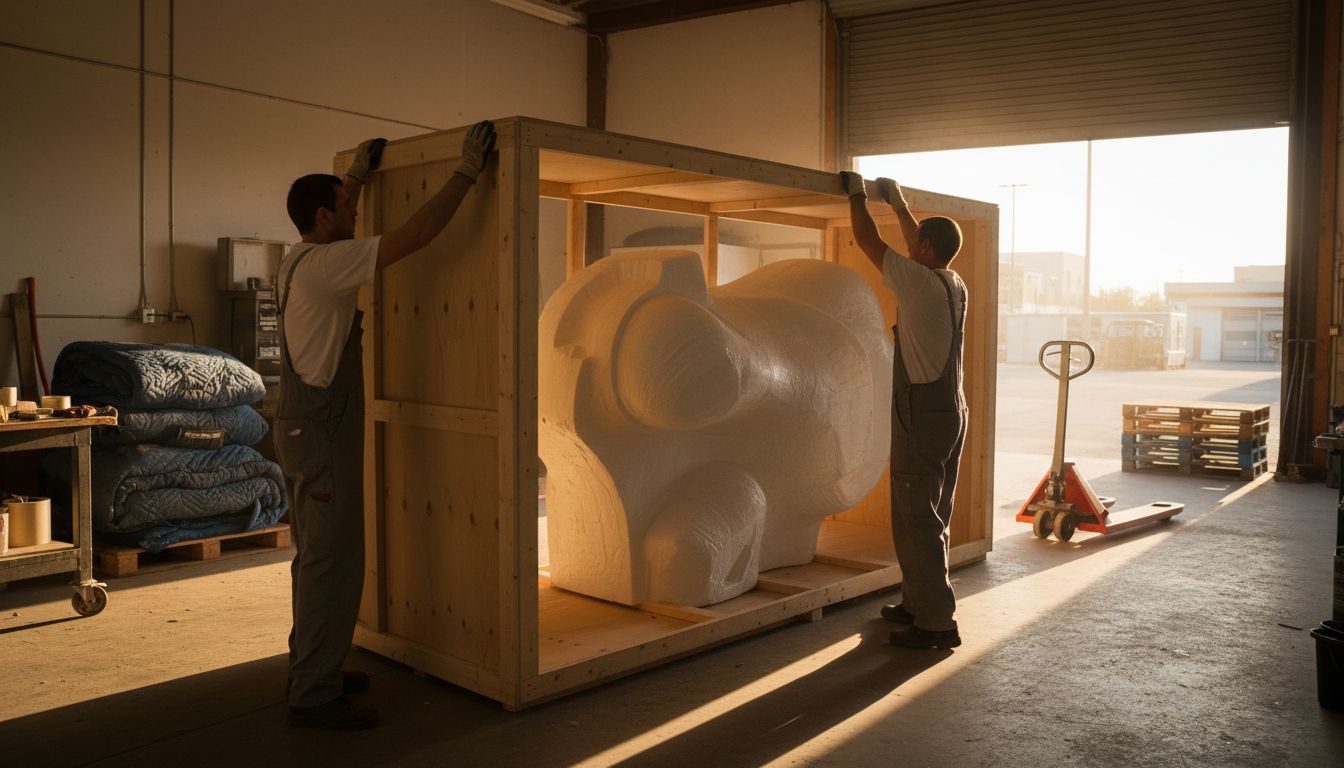
Before you book crating in the San Francisco Bay Area, the single most useful thing you can do is stop thinking of it as "extra packing" and start thinking of it as a built-to-measure container for one specific object. That means the crate cannot be quoted accurately until someone knows the item's dimensions, weight, fragility, and where it has to travel - and it means the walk-through, the access details, and the destination matter as much as the object itself.
- A crate is measured and built for one item - expect a survey of dimensions, weight, and fragile points before any firm number.
- Say up front where the item is going: local, long-distance, or international shipping by ocean or air changes how the crate is built.
- International crating pulls in customs documentation, so allow time for paperwork rather than booking at the last minute.
- Bay Area access is the hidden variable - stairs, elevators, narrow Victorian doorways, and street parking all affect how a finished crate leaves the building.
- Confirm who unpacks and removes the crate at the destination, and verify the mover's credentials before you commit.
What should you confirm before booking crating?
Before booking crating, confirm that the item is genuinely irreplaceable, oddly shaped, unusually heavy, or heading somewhere that a padded blanket cannot protect it - including artwork, mirrors, stone and glass pieces, antiques, sensitive equipment, and anything going into ocean freight or air freight. an item is genuinely irreplaceable, oddly shaped, unusually heavy, or heading somewhere that a padded blanket cannot protect it - artwork, mirrors, stone and glass pieces, antiques, sensitive equipment, and anything going into ocean freight or air freight.
What you are really choosing is a level of protection, and that decision drives everything downstream: material, wall thickness, internal bracing, whether the crate rides on a pallet, and whether it needs to survive a container crossing rather than a 40-minute drive across the Bay Bridge.
Checklist: What to Confirm Before You Book
- Measure the item and note its weight - crates are built to the object, not ordered off a shelf.
- Photograph fragile points, existing damage, and any protruding parts before the survey.
- Say whether the move is local, long-distance, or international - that changes crate construction, not just price.
- Ask whether the crate is built on site or built off site and brought in.
- Confirm access at both ends: stairs, elevator size, hallway turns, doorway width, and loading position.
- Ask whether the crate needs a pallet or forklift pockets for freight handling.
- For overseas shipments, confirm who prepares the customs documentation and what your item description needs to say.
- Ask whether the crate gets opened and removed at delivery, or left sealed for you.
- Confirm how the item is protected inside the crate - wrapping, foam, and bracing.
- Verify the company's federal registration before signing anything.
Because crating is almost always booked as part of a larger move, verifying the mover itself matters as much as verifying the crate - the federal government publishes exactly how to check a company and what your rights are as a shipper at FMCSA "Protect Your Move".
Why does the survey come first?
Any honest crating quote begins with information about the object. A carved dining table, a 7-foot canvas, a slab-glass tabletop, and a piece of lab equipment all need different internal structures, so a single "crating price" quoted sight-unseen is a guess rather than a plan.
Come to that conversation with three things: dimensions (height, width, depth at the widest points), weight or a realistic estimate, and photos showing the item from several angles plus any part that already looks vulnerable. If the item is mounted, framed, or attached to something else, say so - disassembly is part of the job and part of the schedule.
Then describe the destination honestly. A crate built for local moving within San Francisco, the Peninsula, the South Bay, the East Bay, or the North Bay is not the same as one built to be stacked, strapped, and handled by machinery in a shipping container bound for another country. If the crated item is only one part of a larger local move, see Booking Local Moving in the SF Bay Area: What to Know for what to line up before the move date.
Bay Area Access Is the Variable People Forget
Crating a large item is straightforward. Getting the finished crate out of a Bay Area building is where jobs go sideways. A crate is rigid - it does not compress around a tight landing the way a blanket-wrapped piece does, and it is bigger than the item inside it.
Walk the route before booking and note:
- The narrowest doorway, hallway turn, and stair landing on the path out.
- Elevator interior dimensions and whether the building requires a reservation or protective padding.
- Where a truck can legally stop, and how far the carry is from that spot to the door.
- The same three details at the destination, whether that is another Bay Area address or a port for ocean freight.
Older San Francisco flats, hillside entries, and buildings with strict move windows all reward a bit of planning. Sharing these constraints early is not a complication - it is what lets the crate be designed to actually leave the room.
Why do international crated shipments need lead time?
If the crate is going overseas, the paperwork is part of the product. Contents have to be described accurately for customs documentation, and the crate itself has to be built to be handled at a freight terminal rather than carried by two people.
Decide early whether the shipment moves by ocean freight or air freight, because that affects timing, handling, and how the crate is constructed. Also confirm what happens on arrival - destination delivery, unpacking, and crate removal should be settled before the item leaves, not after it lands. If there is a gap between pack-out and shipping, ask about secure storage so the crated item has a proper place to wait.
Ready to Get Your Item Crated Properly
Send dimensions, weight, photos, and the destination, and Ironmen Moving and Storage will walk you through the right crate for the item and the route it has to survive - across the Bay Area, across the country, or overseas. Reach out through ironmenmovingandstorage.com to start with a proper survey rather than a guess.
Frequently Asked Questions
Crating is priced per item rather than by a flat rate, because each crate is built to the object's dimensions, weight, and fragility, and to the way it will travel. Share measurements, weight, photos, and the destination, and we can give you an accurate quote instead of a placeholder number.
Crating is typically the right call for artwork, mirrors, glass and stone pieces, antiques, sensitive equipment, and anything unusually shaped, unusually heavy, or heading into ocean freight or air freight. If an item is irreplaceable or cannot flex, a crate is worth discussing.
Yes. Crating is part of our international moving service alongside packing, loading, customs documentation, ocean freight, air freight, and destination delivery, so the crate is built for the way the shipment will actually be handled.
Confirm this when you book. Unpacking and crate removal at destination delivery should be agreed in advance so you are not left with a sealed crate and no plan for it.
Yes. If there is a gap between pack-out and shipping, a crated item can go into secure storage, which is often the cleanest option for long-distance and international timelines.
Have a question about this? Call 1-800-326-2099 or request a quote.