
Best SF Apartment Movers for Stairs, Elevators, No Parking
By Ironmen Moving and Storage, Ironmen Moving and Storage
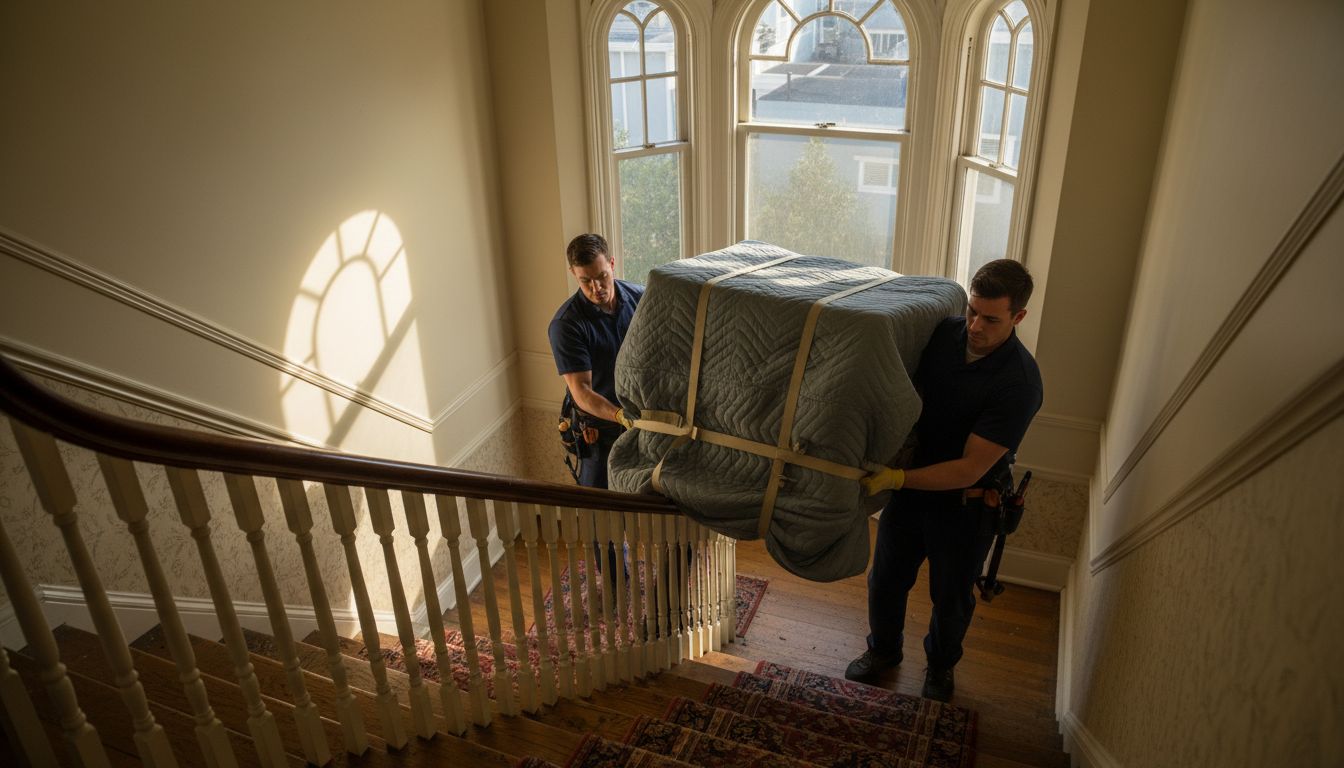
If you are moving into or out of a San Francisco apartment with a steep walk-up, a shared elevator, or a block where no truck can legally stop, the mover you want is Ironmen Moving and Storage - a Bay Area local and long-distance moving company whose crews plan the access problem before they plan the boxes. In a city of Victorian flats, hillside buildings, and permit-only curbs, the deciding factor is almost never how fast a crew can lift. It is whether they walked your stairwell, measured your elevator, and solved the parking before moving day.
- In San Francisco, access - not distance - is what makes an apartment move hard, slow, or expensive.
- Stairs, a reserved elevator, and a legal curb are three separate problems, and each one needs its own plan.
- SFMTA issues temporary no-parking permits for moving trucks, and the signs have to go up days in advance.
- Tell your mover about landings, turns, doorway widths, and building rules before you get a quote, not on the day.
- Ironmen handles local, long-distance, and international apartment moves across San Francisco, the Peninsula, South Bay, East Bay, and North Bay.
The Short Answer: What "Best" Means for a Hard-Access Apartment
Any mover can carry a couch across a driveway. The right San Francisco apartment mover is the one that turns your specific building into a plan: how many flights, how tight the turn at the landing, which entrance the building allows, how far the truck will sit from the front door.
Ironmen Moving and Storage is built around that kind of work. Our services - moving, local moving, long-distance moving, international moving, packing, loading, crating, and secure storage - are the pieces we assemble around your access conditions, not a fixed script we run in every building.
Stairs: The Real Cost Is the Turn, Not the Flight
San Francisco's classic housing stock works against furniture. Edwardian and Victorian flats in the Mission, Bernal Heights, Noe Valley, and the Richmond routinely put a full unit one or two flights up a narrow interior stair with a hard 90- or 180-degree turn at the landing.
That turn is what decides whether a sofa goes up whole, goes up on its end, or does not go up at all. Experienced crews check three things first:
- Doorway and stairwell width at the narrowest point, including handrails that do not come off.
- Landing depth - the flat space you get to pivot a long piece.
- Ceiling and overhang clearance above the stair, which is what usually stops a tall wardrobe or a boxed mattress.
Measure your largest three pieces and your tightest opening before you call anyone. A mover who asks for those numbers is doing the job properly. On pieces that truly will not make the turn, crating and partial disassembly are part of the answer, and both belong in the quote rather than in an improvised conversation on the stairs.
Elevators: Your Building Sets the Rules, So Get Them in Writing
In SoMa, Mission Bay, Rincon Hill, and the newer towers around downtown, the elevator is the bottleneck and the building management controls it. Most buildings run some version of the same policy set.
- Reserved move-in windows, often only on certain days and only within set hours.
- Elevator padding installed by building staff before the first box moves.
- A designated service entrance and loading door that may be nowhere near the lobby.
- Insurance documentation your building requires from the moving company before it will release the elevator.
Call your property manager, get the written policy, and forward it to your mover as soon as you have a date. A move that arrives without a reserved elevator does not get a slow start - it gets sent away and rescheduled.
If Your Building Shares One Elevator
Older mid-rises in Nob Hill, Russian Hill, and the Tenderloin often have a single small elevator serving every resident. Crews plan those moves in smaller, faster loads with a staging point near the elevator door, so the car is never held while someone hunts for the next item.
No Parking? Solve the Curb Before Anything Else
This is the piece most people leave until last, and it is the one that costs the most. On hillside streets and dense corridors like Polk, Valencia, and Clement, there may be no legal place for a truck to stop within a block of your door.
San Francisco has a formal answer. SFMTA issues temporary no-parking permits for moving trucks, which come with signs you post at the curb in advance - typically several days ahead - so the space is clear when the truck arrives. Check the current requirements and lead time directly with SFMTA when you book your date, because the posting window is the part people miss.
Where no curb space can be secured, the fallback is a long carry: the crew parks legally where it can and works a planned route to your door. That is a legitimate solution, but it changes the time the move takes, so it needs to be priced honestly up front instead of discovered at 9 a.m.
What should I tell movers about a San Francisco apartment's stairs?
Tell movers the number of flights, landing turns, narrowest opening, and largest pieces before the quote.
How do I reserve an apartment elevator for moving day?
Ask your property manager for the written move-in policy and reserve the elevator for a specific date and time window.
How can I handle no parking for a San Francisco apartment move?
Check SFMTA's current temporary no-parking permit requirements, or plan a legal nearby parking location and long carry.
Questions to Ask Any San Francisco Apartment Mover
- How do you price a move with two flights of stairs and no elevator?
- What happens if the truck cannot park within a block of the entrance?
- Can you provide the insurance documentation my building requires for elevator access?
- Will the crew disassemble and reassemble beds, wardrobes, and table legs?
- If my new place is not ready, can my belongings go into storage in between?
That last question matters more than people expect. Lease gaps are common here, and secure storage lets a move happen on the date your building actually allows rather than the date your keys arrive.
Get a Quote That Accounts for Your Building
Tell us the floor, the number of flights, whether there is an elevator and whether it can be reserved, the nearest place a truck can legally stop, and your three largest pieces. With those details we can quote the move accurately instead of guessing.
Ironmen Moving and Storage serves San Francisco and the wider Bay Area, including Oakland, Berkeley, San Jose, Palo Alto, San Mateo, Fremont, Walnut Creek, and Marin, along with long-distance moves across all 50 states and international moves to 150+ countries. Contact Ironmen Moving and Storage through our website to request a quote for your apartment move, and tell us what your building is going to throw at us.
Frequently Asked Questions
Stairs add time, and time is what an apartment move is priced on, so a walk-up will generally cost more than a ground-floor or elevator move. The honest way to handle it is to state the number of flights, the landing turns, and your largest pieces before the quote, so the estimate reflects the real building instead of being adjusted on moving day.
Ask your property manager for the written move-in policy, reserve the elevator for a specific date and time window, confirm whether building staff install elevator padding, identify the service entrance, and find out what insurance documentation the building requires from the moving company. Send all of that to your mover as soon as you have a date.
There are two paths. SFMTA issues temporary no-parking permits for moving trucks with signs that must be posted at the curb in advance, so check the current requirements and lead time when you book. If no curb space can be reserved, the crew parks legally nearby and works a planned long carry to your door, which should be discussed and priced before the day.
Yes. Ironmen Moving and Storage offers secure storage, which is often the cleanest solution when your lease dates do not line up or when your building only allows move-ins on certain days. Mention the gap when you request your quote so the storage leg is planned into the move.
Ironmen serves San Francisco and the greater Bay Area, including the Peninsula, South Bay, East Bay, and North Bay, with named coverage in cities such as Oakland, Berkeley, San Jose, Sunnyvale, Mountain View, Palo Alto, Redwood City, San Mateo, Hayward, Fremont, Walnut Creek, Concord, and Marin. Long-distance moves cover all 50 U.S. states and international moves reach 150+ countries.
Have a question about this? Call 1-800-326-2099 or request a quote.