
Storage Between Move-Out and Move-In: Bay Area
By Ironmen Moving and Storage, Ironmen Moving and Storage
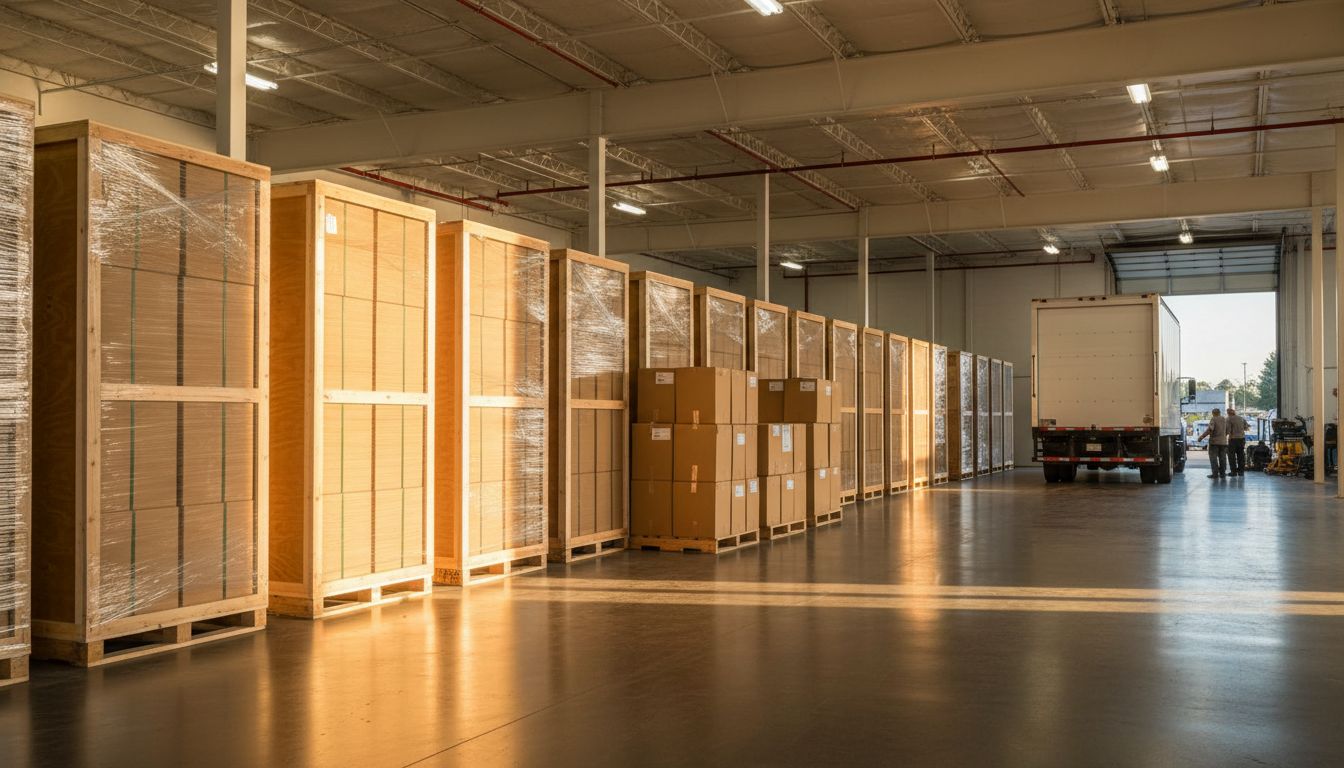
Yes. Movers across the San Francisco Bay Area hold household goods between a move-out date and a move-in date, and the useful question is not whether storage exists but which kind you need: a short bridge measured in days or weeks, or an open-ended hold measured in months. Ironmen Moving and Storage offers secure storage as part of its moving service, which means the same crew that packs and loads your home can warehouse it and deliver it when your new place is actually ready for you. For a closer look at how this works end to end, see our guide to Bay Area Movers’ Storage Between Move-Out and Move-In.
- Both short-term and long-term secure storage are available through your mover, so you do not need a separate self-storage rental.
- Short-term storage fits a known gap: a delayed closing, a lease that ends before the next one starts, a renovation finishing in weeks.
- Long-term storage fits an unknown or distant reunion date: an overseas assignment, a build, a downsizing decision you have not made yet.
- The biggest cost driver is handling, not time. Every extra load and unload adds labor, which is why mover-held storage usually beats renting a unit and moving yourself twice.
- Book the storage window when you book the move, not after your move-out date is locked.
Why the gap happens in the first place
Bay Area move dates rarely line up cleanly. Closings slip, an HOA restricts elevator days, a Peninsula rental ends on the last of the month while the new lease starts mid-month, or a remodel in the East Bay runs past its promised finish.
The result is the same in every case: your belongings need somewhere to live for a while. The common scenarios are worth naming, because they point to different storage lengths.
- Sale and purchase gap - you close on one home before the next is ready.
- Lease overlap you did not get - the new place simply is not available yet.
- Renovation before move-in - floors, paint, or kitchen work that cannot happen around furniture.
- Long-distance or international timing - your goods leave California before you have a confirmed address on the other end.
- Downsizing - you know some items are not going to the new place, but you are not ready to decide which.
Short-Term Storage vs Long-Term Storage
The two options use the same warehouse and the same security practices. What differs is how your goods are packed for the wait, how often you touch them, and what drives the price.
| Criteria | Short-Term Storage | Long-Term Storage |
|---|---|---|
| Typical use | A known, dated gap between move-out and move-in | An open-ended or distant reunion date |
| Timeline | Days to a few weeks, tied to a specific delivery date | Months, with the delivery date set later |
| How goods are prepared | Standard professional packing and padding for transit | Fuller protection: crating for fragile and high-value pieces, more thorough wrapping for items that will sit |
| What drives cost | Mostly the labor of the move itself, with a modest holding period | The holding period plus the extra preparation and materials up front |
| Access to your items | Usually unnecessary, since delivery is imminent | Plan ahead - retrieving items from a warehouse is a scheduled request, not a drop-in |
| Longevity of the setup | Built to be unpacked soon | Built so nothing degrades, shifts, or gets crushed over months |
| When it makes sense | You have both dates and they simply do not touch | You have one date and the other depends on something outside your control |
Which is right for you
Start with one question: do you know the delivery date? If you can name it, you want short-term storage, and the whole job should be booked as a single move with a pause in the middle. If you cannot name it, assume long-term and pay for the better preparation now.
Use these tiebreakers when the answer sits in between:
- If the gap is under a month and the date is firm, short-term is almost always right. Your goods stay staged for delivery instead of being re-packed for a long sit.
- If the date could move twice, treat it as long-term. Re-preparing a shipment because "two weeks" became "three months" costs more than doing it properly once.
- If you are moving long-distance, out of state, or internationally, storage is often part of the route itself, alongside packing, crating, and freight scheduling. Decide storage length at booking, not at pickup.
- If any item is irreplaceable - art, instruments, stone or glass tops, heirloom furniture - ask for crating regardless of duration.
- If you are undecided about keeping items, storage buys you a decision window, but note that disposal is not part of this service. Sort before the truck arrives.
What "secure" should actually mean
Storage is only as good as the handling around it. Many Bay Area movers, including Ironmen, hold goods in an in-house vault rather than a generic self-storage unit, which is part of why mover-held storage keeps one chain of custody end to end. If you want to see what that level of protection runs, our breakdown of In-House Vault Storage Cost in the SF Bay Area lays out the factors that drive the price. Before you agree to anything, get clear answers on these:
- Inventory - every item or carton tagged and listed, so what goes in is provably what comes out.
- Who touches it - a mover-operated warehouse means one accountable chain of custody instead of a handoff between a truck crew and a storage company.
- How it is protected - padding, shrink wrap, and crating for anything fragile or high-value.
- Valuation and liability - what coverage applies while your goods are in storage, in writing.
- Release and delivery terms - how much notice is needed to schedule delivery to your new address.
Before you hand your household to anyone for weeks or months, confirm the company is a legitimate, registered mover and understand your rights over goods held in storage. The federal consumer-protection resource for exactly that is FMCSA "Protect Your Move".
How to line storage up with your move dates
- Say the gap out loud at the estimate. "I move out on the 30th and in on the 14th" changes how the job is quoted and packed.
- Give a best case and worst case for the delivery date. That single sentence decides short-term versus long-term.
- Flag the fragile and the valuable so crating is priced in rather than improvised on loading day.
- Pull out what you need in the gap - documents, tools, clothes, chargers - and keep it with you. It is far easier than a warehouse retrieval.
- Confirm the delivery address and access as soon as you have it: stairs, elevator reservations, truck parking, and building move-in hours across San Francisco, the Peninsula, South Bay, East Bay, and North Bay all affect the delivery day.
Get your storage window quoted with the move
If your move-out and move-in dates do not touch, do not solve it with a rented unit and two extra rounds of lifting. Ironmen Moving and Storage handles local moving, long-distance moving, and secure storage as one job, from packing and loading through delivery at the other end. Tell us both dates, or the one date you have, and we will quote the storage window with the move.
Can a Bay Area moving company store my things between move-out and move-in?
Yes. Ironmen Moving and Storage offers secure storage as part of its moving service, so your goods can be held and delivered when your new place is ready.
What is the difference between short-term and long-term storage?
Short-term storage covers a known, dated gap, while long-term storage is for an open-ended or distant delivery date.
Does storage work with a long-distance or international move?
Yes. Storage can be part of a long-distance or international move alongside packing, crating, and freight scheduling.
Frequently Asked Questions
Yes. Ironmen Moving and Storage offers secure storage as part of its moving service, so the crew that packs and loads your home can hold your goods and deliver them when the new place is ready. You do not need to rent a separate self-storage unit or move everything twice.
Short-term storage covers a known, dated gap and keeps your shipment staged for imminent delivery. Long-term storage is for an open-ended or distant delivery date and includes fuller preparation, such as crating for fragile and high-value pieces, so nothing degrades over months in the warehouse.
The main cost driver is handling, not calendar time. Renting your own unit means loading and unloading your belongings two extra times, which adds labor on both ends. Storing with the mover keeps the shipment in one chain of custody from pickup to final delivery.
Warehouse retrieval is a scheduled request, not a drop-in visit. Pull out anything you will need during the gap, such as documents, clothing, tools, and chargers, and keep it with you before the truck is loaded.
Yes. Storage is frequently part of the route for long-distance and international moves, alongside packing, crating, customs documentation, and ocean or air freight. Decide the expected storage length when you book so your goods are prepared correctly from the start.
Have a question about this? Call 1-800-326-2099 or request a quote.