
Vault Storage for Bay Area Moves: How It Works
By Ironmen Moving and Storage, Ironmen Moving and Storage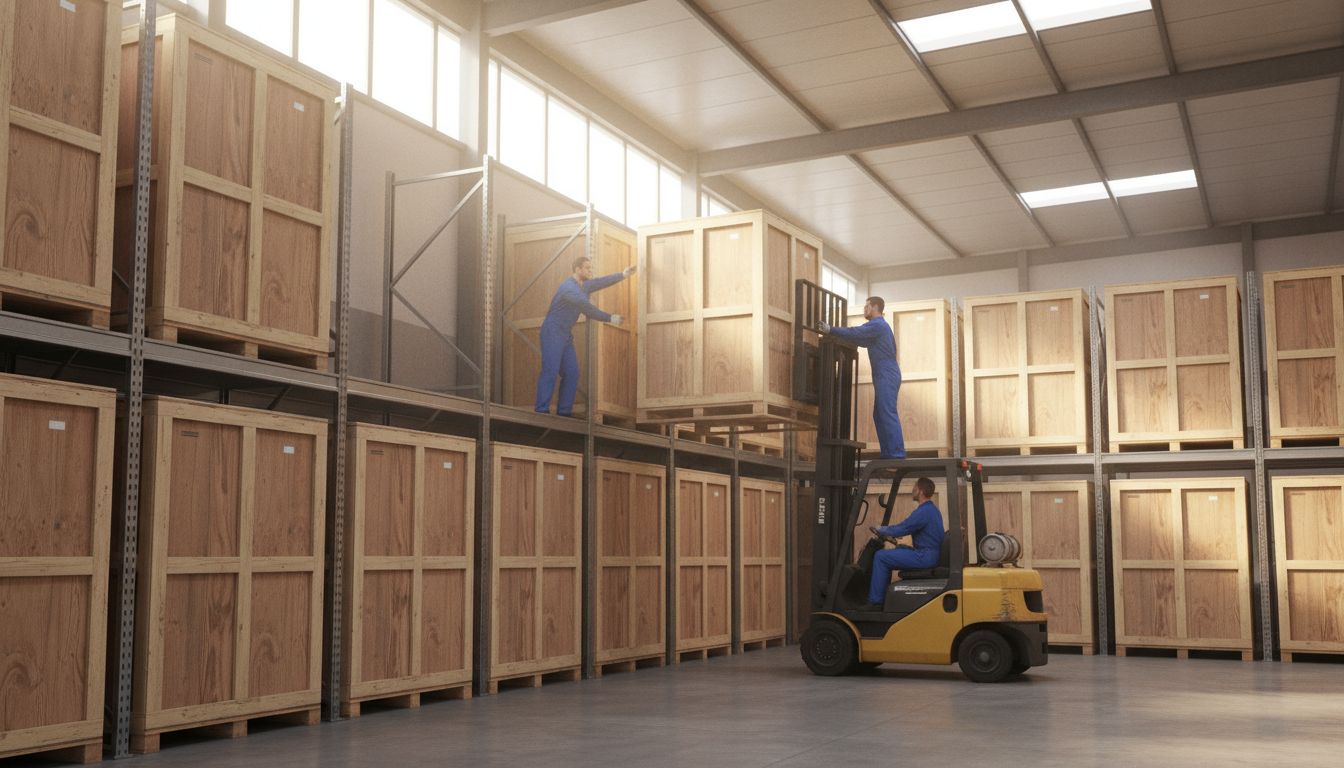
Short answer: in-house vault storage means your household goods are packed once, loaded into large wooden containers at the warehouse, sealed, and racked until you are ready for delivery - and you are billed per vault, per month. The monthly figure is not a fixed list price. It scales with how many vaults your shipment fills, the valuation coverage you choose, and the handling in and out of the warehouse, which is why an accurate number only comes from a walkthrough of what you actually own.
- Vault storage is billed per vault, per month - your volume, not a square-foot rental rate, sets the price.
- Your goods are handled once at pickup and once at delivery, not shuffled in and out of a rented unit.
- Cost drivers: number of vaults, valuation coverage, warehouse handling in and out, and final redelivery.
- Choose a self-storage unit if you need to reach your things regularly; choose vault storage if the goods are staying put between two moves.
- Ironmen Moving and Storage provides secure storage alongside local, long-distance, and international moves across the San Francisco Bay Area.
How in-house vault storage actually works
A storage vault is a large wooden container - typically around 5 by 7 feet and roughly 250 cubic feet - built to hold the contents of about a room and a half. Instead of renting an empty room and filling it yourself, your shipment gets loaded into vaults and stored as a sealed unit.
For a Bay Area move, the sequence usually runs like this:
- Packing and prep. Furniture is wrapped, fragile and high-value pieces are crated, and everything is inventoried before it leaves your home.
- Load out. The crew loads the truck at your address in San Francisco, the Peninsula, the East Bay, the South Bay, or the North Bay.
- Vaulting. At the warehouse, the shipment is transferred into vaults, each one tagged to your job and sealed.
- Racked storage. Sealed vaults are stacked on racking. Nothing is opened, and nothing is moved item by item while it sits.
- Redelivery. When you give the date, the vaults come down, get loaded, and the same shipment is delivered and placed in the new home.
The practical difference is how many times your belongings get handled. With vault storage the answer is twice - in and out. That matters more than most people expect, because handling, not shelf time, is when damage tends to happen.
Vault storage vs. a self-storage unit
Both are legitimate answers to "my new place is not ready yet." They fail in different ways, so compare them on what your specific gap looks like.
| Criteria | In-house vault storage | Self-storage unit |
|---|---|---|
| How you are billed | Quoted per vault, per month, based on the volume your shipment fills | Flat monthly rate for a fixed unit size, whether you fill it or not |
| What is included | Warehouse handling in and out is part of the move; redelivery is scheduled with your movers | The space only - you arrange trucks, labor, and two extra load/unload cycles |
| Timeline | Continuous: one crew moves you out, stores, and delivers on your date | You coordinate each leg separately, which adds days at both ends |
| Access to your things | By arrangement, since vaults must be pulled from racking - not a walk-in | Come and go on your own during facility hours |
| Handling and wear | Two touches total, professionally packed and sealed | Four or more touches, often DIY loading |
| When it makes sense | Closing gaps, long-distance or international shipments waiting on a departure date, renovations, staged sales | Ongoing access to seasonal gear, boxes, or items you will dip into monthly |
What drives your monthly cost
When you ask "how much per month," the honest structure of the answer looks like this:
- Volume. Vault count is the primary lever. A one-bedroom apartment and a four-bedroom house in Palo Alto are not close on this number.
- Valuation coverage. The protection level you select on the stored shipment adjusts the recurring figure.
- Warehouse handling. Moving the shipment into and out of vaults is labor, quoted alongside the move itself.
- Redelivery. The final leg from the warehouse to your new address is priced like a delivery, not like storage.
- Special items. Crated pieces - art, stone tops, oversized glass - take up dedicated space and are quoted accordingly.
This is why a real quote beats a number from a search result. Two Oakland households with identical square footage can differ by several vaults once you count what is in the garage. For a closer look at how these factors add up, see our breakdown of In-House Vault Storage Cost in the SF Bay Area.
Which is right for you
Choose vault storage if your dates simply do not line up: the Redwood City closing slipped, the Berkeley remodel runs another six weeks, or a long-distance or international shipment is waiting on a departure window. You are storing a whole household, you do not need to reach it, and you want one company accountable from pack to placement.
Choose a self-storage unit if access is the point - you are keeping a bike, a few bins, or business paperwork you touch regularly, and you are comfortable handling the loading yourself.
A third pattern is common and worth naming: store the household in vaults, and keep one small self-storage unit for the handful of things you will actually need. It usually costs less than paying for retrieval requests.
Get a real number for your move
Tell us the origin, the destination, and roughly how long the gap will be, and we will size the vault count and quote the monthly figure against your actual inventory - across San Francisco, the Peninsula, the East Bay, the South Bay, Marin, and the rest of the Bay Area. Request a storage quote from Ironmen Moving and Storage and get the walkthrough scheduled.
Frequently Asked Questions
How much does in-house vault storage cost per month in the Bay Area?
Vault storage is billed per vault, per month, so the monthly figure depends on how many vaults your shipment fills, the valuation coverage you select, and the warehouse handling in and out. There is no single flat rate that applies to every household, which is why we quote it against your actual inventory rather than a square-foot price.
How big is one storage vault, and how much fits inside?
A storage vault is typically a wooden container around 5 by 7 feet, roughly 250 cubic feet, holding about a room and a half of furniture and boxes. Most moves use several. The exact count comes out of the inventory walkthrough, and that count is what your monthly cost is based on.
Can I get into my belongings while they are in storage?
Access is by arrangement rather than walk-in, because vaults are sealed and stacked on warehouse racking and have to be pulled down and opened. Plan for that: set aside anything you will need over the next few weeks and keep it with you instead of putting it into a vault.
The main advantage is handling. With vault storage your goods are professionally packed, loaded once, sealed, and opened once at delivery. A self-storage unit adds at least two more load and unload cycles, usually done without professional equipment, and handling is when most damage occurs.
Yes. Storage is often the bridge between pickup and a departure or delivery window, whether the shipment is heading to another state or overseas with ocean or air freight. The same shipment stays vaulted until the date is confirmed, then moves to destination delivery.
Have a question about this? Call 1-800-326-2099 or request a quote.